Theses for a Plan and Strategy to Rebuild Ukraine (Part 1)
"No one will build a state for us if we do not build it ourselves, and no one will make a nation out of us if we ourselves do not wish to be a nation."
(Viacheslav Lypynskyi, "Letters to the Brother Farmers")
A prosperous future for Ukraine is possible only under the condition of its full integration and sustained presence within the broader European civilizational and cultural space – as an inseparable part of the community of democratic countries of Europe and the world. This choice is determined not by abstract theories or the temporary political interests of those in power. The history of our origins, our cultural development, and our geographical position leave virtually no alternative path for the sovereign, self-sufficient, and successful development of Ukraine and its People.
At the same time, this civilizational choice will not materialize on its own. Without joint efforts by civil society, responsible elites, and clearly defined development strategies, its implementation will be impossible. The alternative is absorption into an authoritarian, clan-based, feudal model more characteristic of the Asian civilizational space – a model that poses a direct threat to Ukraine as a European state.
To consolidate Ukraine's European and democratic trajectory, key priorities must focus on strengthening four fundamental pillars of state power: the ECONOMY, the ARMY, DIPLOMACY, and a new INFORMATION POLICY. Their development must reach a level capable of reliably deterring Russia from any future plans or attempts at aggression.
Achieving this requires reform of the political governance system, the formation of at least two political parties founded on democratic ideology – one conservative and one liberal – the elimination of systemic corruption within government, and the return of a professional and competent elite to positions of power.
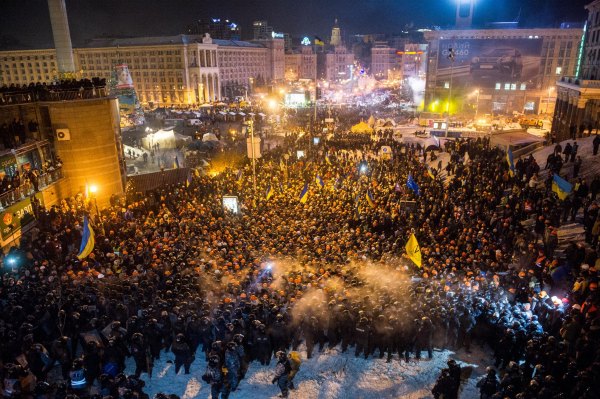
Through two Maidan uprisings in 2004 and 2013, and through twelve years of resistance to Russian authoritarianism in its Asian form, Ukraine has proven that it has a freedom-loving people inclined toward democracy, as well as some of the world's finest professional soldiers. The time has come to reform Ukraine's POLITICAL ELITES, who must become worthy of both the Ukrainian People and their courageous Soldiers.
Further formation of these elites through elections should take place primarily from among the country's PROFESSIONAL ELITES and the best representatives of the ARMY. The era of voting for long-standing "professional politicians," "young Euro-optimists," populist "whistleblowers," professionally incompetent "civil society activists," and "effective managers" lacking any serious professional background has passed. Ukraine has already paid an excessively high price for electoral mistakes in the past.
Accumulated experience demonstrates that talented and even brilliant individuals, as well as a professional and competent elite, are not needed by oligarchs or corrupt authorities. Such people pose a threat to their dominance and to the plundering of the state's resources and wealth.
The media outlets they control "do not notice" talented professionals or the genuine expert elite. Not only do they fail to promote them, they deliberately smear them, spread slander, and deploy black PR. The goal is to prevent their access to political power and to fabricate artificial substitutes in the public consciousness – "paper experts" from among "their own," an artificially inflated, government-controlled "ratings elite." These include figures branded as "heroes of the Maidan," "dear friends," "Euro-optimists," "young faces in power," "civil society activists," "whistleblowers," "successful volunteers," and "heroes of the war"...
In this way, over recent decades, the remnants of a professional, non-partisan component within state governance bodies have been destroyed. The current "political elite" has been filled with cynical deal-makers, political conformists, criminals, traitors, and corrupt, professionally incompetent figures. This became one of the additional factors that provoked aggression against Ukraine and the outbreak of war.
The backbone of Ukrainian statehood must finally become PROFESSIONAL EXPERTS and the ARMY, rather than punitive bodies prepared to defend a corrupt political system.
The next stage of the recovery strategy must be reviving and strengthening Ukraine's industrial and production capacity, as well as building a productive and innovation-driven economy. Priority state protectionism and a radical reduction of tax pressure on small and medium-sized businesses are essential conditions for this process. Without such economic measures, expanding the middle class – the social foundation of democracy – is impossible.
Ukraine possesses sufficient potential for this even without external assistance. Overcoming corruption and engaging in a genuine fight against it at the highest levels of power is one of the primary sources of internal funding for these programs. This would halt the continued looting of the natural resources of one of the world's richest countries in this regard.
It is worth recalling that Ukraine ranks first in Europe and 44th globally (out of 195 countries) by territory – 603,548 square kilometers. In terms of arable land area – nearly 33 million hectares – Ukraine also ranks first in Europe and sixth in the world. Arable land accounts for approximately 53% of Ukraine's territory, which is the highest figure in Europe.
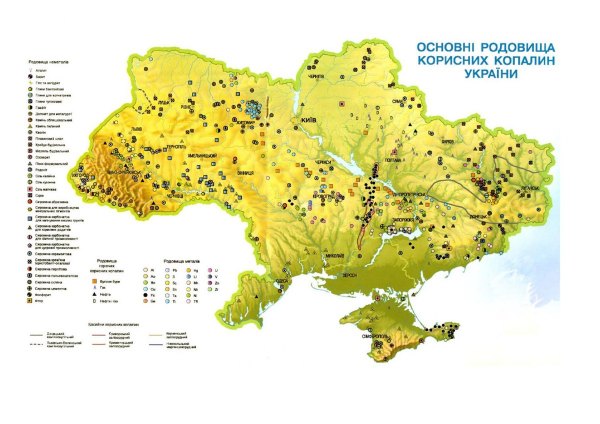
Ukraine also ranks first in Europe in uranium ore reserves. It possesses a developed nuclear energy sector, ranks second in Europe and tenth globally in titanium ore reserves, and second globally in manganese ore reserves – approximately 2.3 billion tons, or around 12% of global reserves. Ukraine ranks second in the world in iron ore reserves – approximately 30 billion tons. It also ranks second in Europe in mercury ore reserves and third in Europe in shale gas reserves – around 22 trillion cubic meters, ranking 13th globally. In coal reserves, Ukraine ranks seventh worldwide, with approximately 33.9 billion tons of proven resources.
It should also be remembered that Ukraine remains a developed industrial country with relatively advanced internal infrastructure. It ranks third globally and second in Europe in underground natural gas storage capacity. In terms of main gas pipeline length, it ranks second in Europe and fourth globally. By railway network length, Ukraine ranks eleventh in the world: approximately 21,000 kilometers.
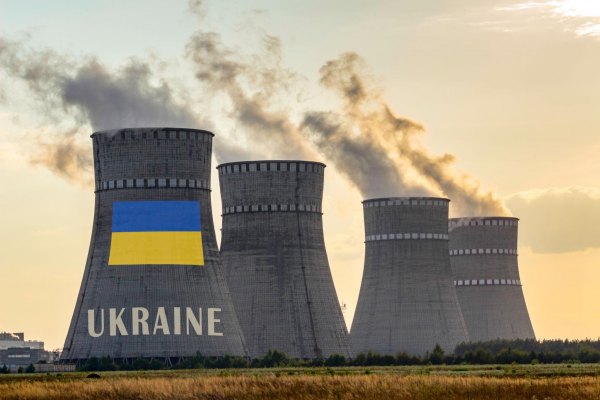
In nuclear power plant capacity, Ukraine ranks third in Europe and eighth globally. Prior to the war, Ukraine ranked first in Europe in ammonia production, third globally in the production of radar equipment and iron exports, and fourth globally in exports of nuclear power turbines, rocket engines, titanium, and clay. It ranked eighth in exports of ores and concentrates, ninth in exports of defense industry products, and tenth in steel production – approximately 32.4 million tons annually.
Once again, I emphasize: Ukraine ranks first in Europe in arable land area and third globally in black soil (chernozem) reserves, estimated at around 255 of global supply. Ukraine ranks first globally in sunflower oil exports, second in barley production, and fourth in barley exports. Until 2022, Ukraine ranked third globally in corn production and fourth in its export, as well as in potato production. It ranks fifth globally in rye production, fourth in honey exports, eighth in wheat exports, ninth in chicken egg production, and sixteenth in cheese exports.
However, as noted above, the implementation of such a strategy is possible only with the participation of those who possess a panoramic and systemic vision of the world and of Ukraine's place within it. Without rose-colored glasses or populism, without illusions about selfless allies and partners. Such leaders must possess fundamental professional knowledge and practical experience acquired prior to entering political office.
War and destruction have already proven that previous attempts at state-building without a HOLISTIC vision of a LAW-BASED STATE resulted in the emergence of an oligarchic-clan autocracy masquerading as democracy. In essence, this represents an attempt to replicate the Russian, Asian model – the very model against which the Ukrainian PEOPLE and ARMY have risen and continue to fight.
Raising the political culture of society and individual voters in Ukraine is critically important in this context. Our society already knows how to rise up against authoritarianism and take to the Maidan. But it does not know how to elect a worthy government afterward. Twice, the People's victory over arbitrary power was cynically "stolen" by political forces from the "Maidan stage." In exchange for populism and empty slogans, without strategy or real reform intentions, old-new politicians became wealthier, while the political system became less transparent and more authoritarian.
This is precisely why new strategies and laws for building democracy are needed. It is necessary to disseminate among voters the fundamental democratic values that new elected officials must uphold not in words, but in practice, and implement in post-war life.
Three fundamental laws of democracy were formulated and published prior to the 2019 presidential elections (newspaper Day (Den'), article "Unlearned Lessons of the Hetmanate and the National Idea of Ukraine in Contemporary Conditions", 2018 https://day.kyiv.ua/article/den-planety/nevyvcheni-uroky-hetmanatu-ta-natsionalna-ideya-ukrayiny-u-suchasnykh-umovakh2). These laws received a national copyright registration certificate (No. 87693, April 11, 2019).
The first law of modern democracy is the law of a necessary level of socio-economic development and political culture within civil society to ensure the effective functioning of democratic institutions.
Its essence lies in the fact that while a critical mass of a prosperous middle class and a certain level of political culture are necessary conditions for democracy, they are not sufficient on their own.
They must be adequate to ensure the functioning of democratic institutions, societal oversight of power, and the necessary adaptation of governance mechanisms to protect democracy in response to changes in both the internal and external environment.
The second law of modern democracy is the law of configuration (the distribution, balance, and checks of power) within a democratic system.
This means that genuine, not merely formal, electoral accountability, transparency of government bodies, and equality of all citizens before the law can be ensured only through the real separation of the three branches of power: legislative, executive, and judicial.
At the same time, the maximum possible number of internal state governance functions should be transferred to the lowest feasible level – local self-government – while the rights of the parliamentary opposition must be clearly defined and legally protected.
The third law of modern democracy is the law of political stability, continuity, and professionalism of public administration.
Its essence lies in the fact that while the existence of at least two non-leader-centric political parties founded on democratic ideology is a necessary condition for political stability, it is not sufficient. These parties may differ in their visions of the world's evolutionary development – one conservative, the other liberal – but they must be united by shared democratic values: electability, accountability, and openness of state power to society.
As for preserving continuity and professionalism in democratic governance, this must be ensured through a legally defined system protecting non-partisan professional civil servants from unlawful political interference.
Politicians change with each election, while non-partisan professionals develop their careers over decades. They must be the bearers of institutional memory, expertise, and stable traditions of state governance.
The guarantee of all this must be freedom of speech and professional, patriotic media free from unlawful influence – the fourth element of non-state power in a democracy.
Let me remind you that if the "fourth estate" – the media – fails to help society distinguish between political and professional elites, does not promote the best professionals capable of systemic and panoramic thinking, and of developing scientifically grounded strategies, but who lack access to strategic decision-making, then it artificially restrains the renewal of political elites. In effect, it becomes an accomplice to deprofessionalization, incompetence, and corruption in state power. It facilitates and paves the way to power for fraudsters, populists, corrupt officials, and criminals.
True benchmarks for defining elites have long been articulated:
"Power not guided by wisdom leads to disorder and injustice."
(Socrates, 5th century BC)
"Those who buy power with money become accustomed to profiting from it."
(Aristotle, 4th century BC)
"The elite are those who can look far ahead and preserve what matters most – human dignity. There would be far less evil in the world if all those in power understood that in their hands lies a beautiful way of serving others."
(Cardinal Lubomyr Husar)
Блог автора – матеріал, який відображає винятково точку зору автора. Текст блогу не претендує на об'єктивність та всебічність висвітлення теми, яка у ньому піднімається. Редакція "Української правди" не відповідає за достовірність та тлумачення наведеної інформації і виконує винятково роль носія. Точка зору редакції УП може не збігатися з точкою зору автора блогу.