Theses for a Plan and Strategy to Rebuild Ukrainian Economy (Part 2)
"I believe that a healthy national spirit will sweep from our body the contagion of Moscow Bolshevism, and that all Ukrainian statesmen will find their way to one another and, united under the protection of a single guiding idea, in a creative surge will win and rebuild Ukraine."
(Danylo Skoropadskyi, Ukrainian political and public figure, son of Hetman Pavlo Skoropadskyi)
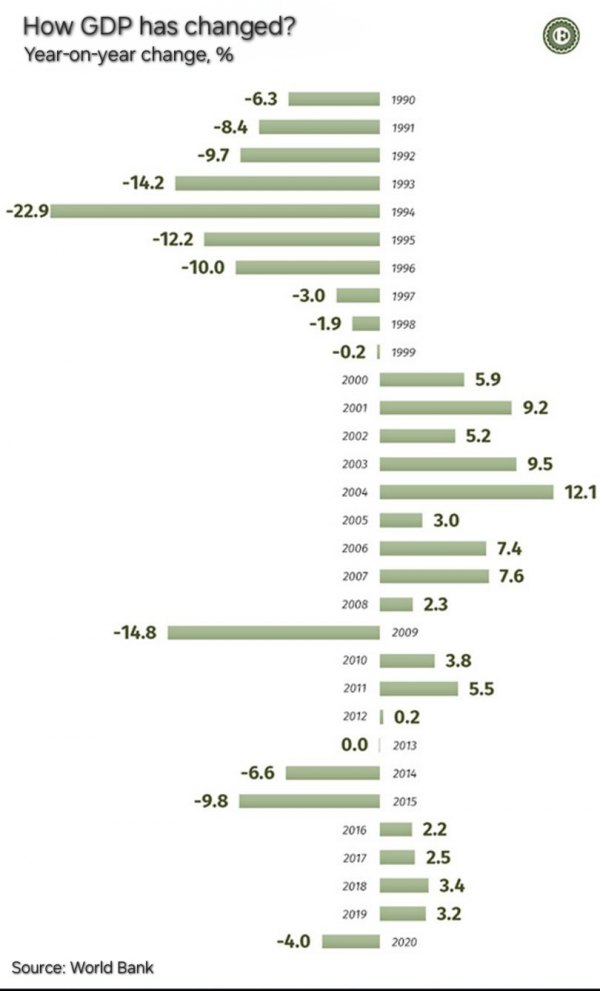
Following the collapse of the Soviet Union, Ukraine possessed sufficient economic, military, diplomatic, and informational capacity to ensure a successful transition to a market economy and to establish democracy. Ukraine was the most educationally advanced, scientifically and technologically developed, and industrialised republic of the former USSR. It ranked among the world's twenty most industrially developed countries and placed between second and fifth globally in terms of the value of explored natural resources per capita.
The modernisation of the economy was to be carried out while maintaining Ukraine's leading positions in science, technology, and strategic sectors of the real economy, and in the development of human capital, based on already established systems of education, science, culture, and healthcare. Ukraine had sufficient human (more than 50 million citizens), military, financial, energy, raw material and infrastructure resources to implement these tasks.
The freedom-loving, highly educated, law-abiding, and industrious people of Ukraine were prepared for such a transformation. By contrast, the political elites who came to power in Ukraine proved unprepared. Their primary objective was not the formulation and implementation of a coherent transformation strategy, but rather personal enrichment and the retention of power-whether executive or legislative. What mattered most was access to the country's resources and guarantees of their own impunity. This was facilitated, in particular, by periodic rebrandings of political affiliations, shifting from the "Social Democrats (United) " to the "Party of Regions," then to "Our Ukraine," back to the "Party of Regions," and ultimately to self-proclaimed "European" forces...
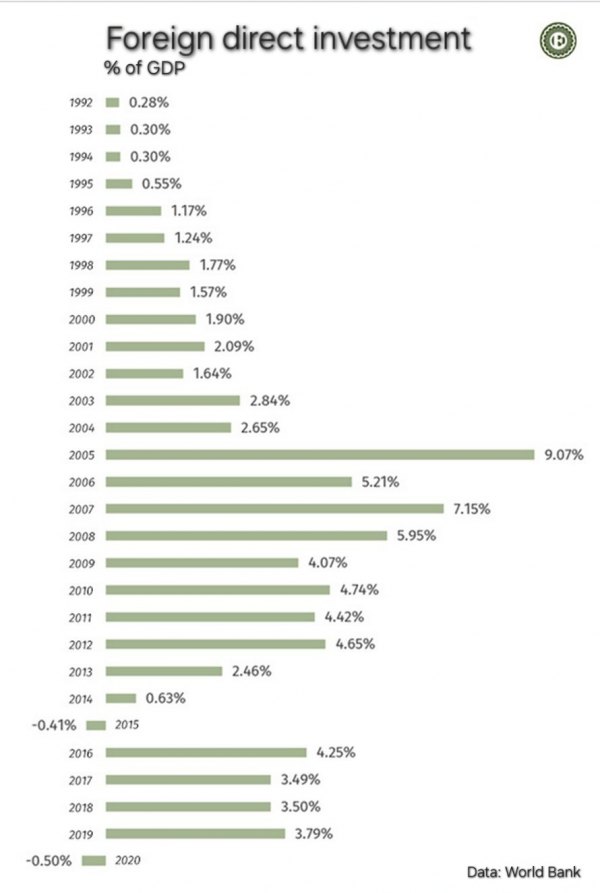
At the same time, the right strategy for transforming Ukraine's economy in the early 1990s could have secured advanced technology and the right to high-tech production under Western licences – in exchange for partial nuclear disarmament, the use of its own rich resources and the gradual opening of the domestic market. China is an example of one option for such an approach. This country pursued a process of opening its own market in accordance with national interests, in exchange for advanced Western technologies and innovations.
In Ukraine, by contrast, the lack of proper state regulation and protectionism deprived the economy of immunity from unfair competition. Its own market, the largest in Europe in terms of territory, was opened without the principle of reciprocity and without proper protection of national interests and domestic producers.
Artificially promoted slogans of 'liberalisation,' "globalisation" and 'decommunisation' led Ukraine's economy to unjustified deindustrialisation and large-scale plundering of national wealth. Similarly, the criminal thesis that 'the state is not an effective manager and owner' was used to justify a predatory privatisation of state property that proved detrimental to national interests.
Even Ukraine's unprecedented nuclear disarmament and the opening of one of Europe's largest domestic markets were not linked by Ukrainian politicians to reciprocal steps in purely national interests. This is what China did, without nuclear disarmament. China received cutting-edge Western technologies and opened Western markets to its goods and products.
Ukraine's political elites ignored the expertise of their own specialists and did not put forward any similar conditions for the creation of high-tech industries in Ukraine, based on its raw materials and components, and using its own labour force. At a minimum, this could have been pursued in the defence-industrial sector to modernise conventional weapons systems and military equipment as compensation for the relinquishment of nuclear arms.
Successive Ukrainian governments never developed, and in practice never possessed, a comparable strategy for safeguarding national security and defence. Analyses of the consequences and relevant proposals from scientific circles, professional experts and military intelligence were traditionally ignored. Work plans and strategies for preserving and supporting domestic manufacturers of high-tech end products have yet to be developed.
Even after 12 years of open aggression and prolonged war, no sectoral development and modernisation programmes have been developed for critically important industries and infrastructure to ensure Ukraine's security and defence in its current non-aligned status. At the government level, no one has systematically addressed either the strategy of deep modernisation of industries that lag behind world standards or the preservation and development of those that remain competitive. This is despite the fact that Ukraine began its independence with some of the strongest starting conditions among the former Soviet republics, and with scientific, engineering, and industrial personnel whose qualifications and production culture ranked among the highest.
At least until 2005, with the appropriate political will, the existing vertical structure of state administration still allowed control over the processes of denationalisation and privatisation of strategic sectors of the economy. Pavlo Lazarenko's attempt to become the country's first oligarch with his own political force in parliament and connections with senior law enforcement officials ended with his imprisonment in the United States. Ukraine's intelligence services were still able to counter attempts by other contenders for oligarchic status to illegally interfere in politics.
A critical mass of non-partisan professionals in government was still able, with the right strategy and political will, to promote small and medium-sized businesses, establish appropriate funds for sectoral economic development, and regulate foreign capital's access to the domestic market. In exchange for direct investment, the latest technologies and the placement of final product manufacturing in Ukraine.
But, as we know, 'politicians think about the next election, while statesmen think about the next generation.' Only the professional component of state power is capable of ensuring government stimulation of fundamental research, knowledge development and innovation. Without this, the development of the national economy and human capital, based on support for education, science, health care, demography, and ecology, becomes impossible.
American researcher Jacques Fresco described the social psychotype of the behaviour of 'political elites' as follows: "Our customs, behaviour and values are by-products of our culture. No one is born with greed, prejudice, fanaticism, patriotism, or hatred; these are all learned patterns of behaviour. If the environment does not change, such behaviour will be repeated."
Therefore, in order to change the 'culture of the political environment,' we need a new strategy and new 'designers' – not old 'professional politicians' or 'experienced activists,' 'selfless volunteers' or 'socially active whistleblowers,' but rather skilled professionals with significant life and professional experience. First and foremost, these are scientists and educators, economists and technocrats, and experienced, patriotic military personnel. Without renewing the 'political elites' with new 'architects' and 'state builders' from among Ukraine's professional elites, it will be impossible to change this situation.
The lesson of state-building in Ukraine since 1991 is that from the outset, the 'political elites' failed to define the right strategy and set the right priorities during privatisation. The slogans of 'economic liberalisation' and political 'globalism,' introduced from outside and readily embraced by those in power, within an unreformed political system, effectively opened the door to the plundering of Ukraine's national wealth. This was done by both the new-old 'political elite' and by representatives of transnational corporations, Western business interests, and Russian oligarchs.
At the same time, each successive government became even more corrupt and less professional than the previous one. There was a steady trend towards a reduction in state support for small and medium-sized businesses, an increase in the tax burden on them and a weakening of legal protection for small and medium-sized business owners (small and medium-sized businesses). After peaking in 2004, their numbers began to decline in Ukraine. Consequently, this led to a reduction in the socio-economic base of an already unstable and not yet fully formed democracy.
A striking contrast in this regard is, for example, the experience of neighbouring Poland. There, the privatisation of state property was carried out through special investment funds. Every citizen could obtain privatisation certificates with the right to exchange them for a share in such funds. Importantly, it was the citizen – not the state – who chose the specific fund. Unlike Ukraine, Poland did not experience 'wild privatisation', in which industrial giants ended up in the hands of a small group of people at a non-market, extremely low 'residual' value. This happened with virtually no competition and only because the new owners were close to the government. It was from among them that the oligarchs began to emerge.
After the two Maidan Uprisings – in 2004 and 2014 – such processes only accelerated and, in fact, lost any criticism even from the sham parliamentary opposition. The recent sale of the United Mining and Chemical Company, engaged in the extraction of titanium ores, is another surrender of Ukraine's national interests. This effectively demonstrates the 'squandering' of the Ukrainian people's strategic economic resources and property, without their thorough processing and use, both to generate significant additional revenue for the budget and to serve as a factor in Ukraine's strategic political influence in the international arena. This is an attack on Ukraine's sovereignty.
By these actions, the government has effectively deprived itself of control over a strategic industry and raw materials on which the entire developed world depends. Moreover, it has transferred this control to a country that has applied for membership not in the EU and NATO, but in BRICS. The only sound privatisation strategy would have been a conservative approach that preserved state control over strategic sectors of the economy.
An example of this is the experience of General Charles de Gaulle's reforms in post-war France. Thanks to these reforms, he transformed a country that had been occupied during the war into an influential world power once again. The basis of this strategy was selective state protectionism and flexible government regulation of state and private property, primarily in the energy, nuclear and heavy industries, as well as in strategic sectors of the economy. At the same time, the state retained the unconditional right to block the private sector from destroying national scientific and industrial production of strategic importance.
After all, even in large countries, fundamental scientific developments, high-tech industries with closed production cycles, system-forming enterprises in the military-industrial complex, mining and chemical industries, and energy and transport are unable to ensure national interests without state support and protection.
China also demonstrates how state protectionism can become the basis for technological rearmament, protection of its own market, national producers, and effective tariff policy.
In fact, since 1991, Ukraine's strategy has been to prevent its deindustrialisation and maintain its status as one of the twenty most industrially developed countries in the world. Instead, the opposite happened: the liberal approach prevented the fulfilment of both strategic tasks and created the preconditions for the formation of an oligarchic, neo-feudal, and clan-based system of government in Ukraine, disguised as 'liberal democracy'. Unfortunately, this was the path chosen in Ukraine.
Initially, certain elements of state regulation and a conservative approach remained in place. However, after 2004, there was a rapid shift toward full-scale liberalisation. This paved the way for Ukraine to become an agrarian and raw-material appendage to more powerful states and transnational corporations, under the slogans of professional ignorance and political populism: 'the state is not an effective owner' and 'the free market will regulate everything by itself, even without state intervention'.
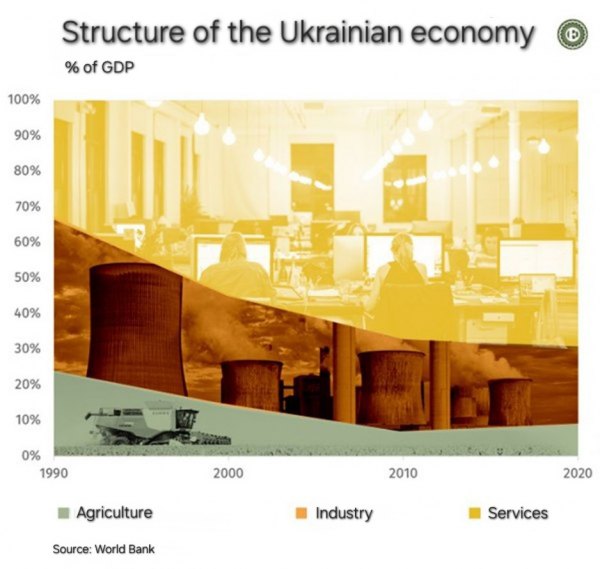
China is a vivid contemporary illustration of the advantages of an alternative strategic model. At the same time, the processes of 'wild privatisation' and the transformation of Ukraine into an agrarian and raw-material appendage were accompanied by the concealment of the truth from the Ukrainian people.
Politicians still often pretend that the scientific, political, and economic knowledge and experience of previous generations did not exist before them. In particular, we refer to the patterns proposed by the German scientist Friedrich List (1789-1846), who advocated the principles of conservatism and protectionism during the transition to market-based economic relations, particularly when a nation seeks to maintain economic and political independence from other states.
His ideas and the patterns he formulated were successfully used during the unification of Germany in the 19th century, as well as in the post-war reconstruction of Japan and South Korea in the 20th century.
Compare their positions with the situation in Ukraine in 1991. Here is what he wrote in the 19th century during the unification of Germany: "The widespread and total establishment of the principle of free trade, the maximum reduction of customs duties and complete market liberalisation in practice only strengthen the state that has long and successfully followed the market path. At the same time, a state with a different economic history, where the domestic market is still in its infancy, is economically and politically weakened..."
"...The market is an instrument that functions according to the principles of enriching the rich and impoverishing the poor, strengthening the strong and weakening the weak. Contrary to claims of universality, liberal theory is in fact not at all scientific and impartial."
Theses for a Plan and Strategy to Rebuild Ukraine (Part 1)
The author's blog is a material that reflects the author's point of view solely. The text of the blog does not claim to be objective and comprehensive in covering the topic it raises. The editorial staff of the Ukrainska Pravda (UP) is not responsible for the accuracy and interpretation of the information provided and acts solely as a carrier. The views of the UP editorial staff may not coincide with those of the blog author.
Блог автора – матеріал, який відображає винятково точку зору автора. Текст блогу не претендує на об'єктивність та всебічність висвітлення теми, яка у ньому піднімається. Редакція "Української правди" не відповідає за достовірність та тлумачення наведеної інформації і виконує винятково роль носія. Точка зору редакції УП може не збігатися з точкою зору автора блогу.