Elites, Society and Strategies, continued (Theses for the Plan and Strategy to Rebuild Ukraine – 5.4)
"People will not look forward to posterity who never look backward to their ancestors", Edmund Burke (1729- 1797)
As early as the 17th century, Ukraine's history provided grounds for considering it perhaps the most democratic and developed country in Europe. Voltaire attested to this in his writings. In his correspondence with Catherine II, he also noted that Europe did not recognise Muscovy as the successor to Rus. "The only Rus known to us in Europe is that of Kyiv, whose last king was Danylo of Halych,' wrote the great French thinker.
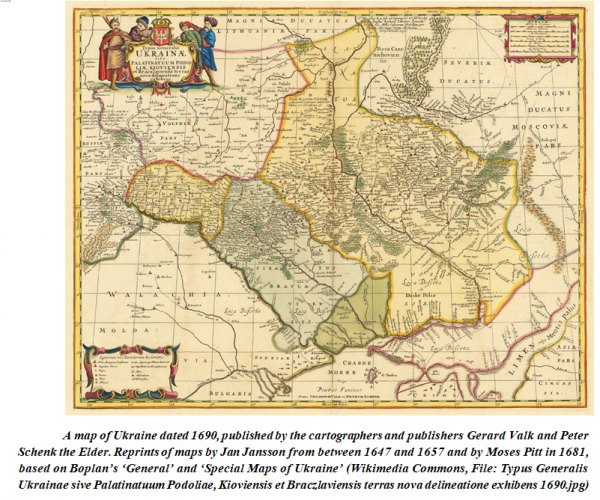
Kozak democracy in Ukraine in the 17th century was more widespread across society than the limited nobility (szlachta) -based democracy of Poland. It offered favourable conditions for further economic development, the fair distribution of land and the development of society free from feudal dependence.
Ukraine enjoyed a favourable climate and possessed around 25 per cent of the world's fertile black earth reserves. It had freedom-loving, hard-working people, whose lands had seen agricultural development since the Trypillia culture – five millennia before Christ – and whose Scythian ploughmen had sustained the ancient Greek world for centuries.
Economically self-sufficient and always striving for freedom and justice, the Ukrainian people of that era were already able to develop free farming and craftsmanship successfully. This formed the bedrock for the growth of the middle class – the foundation for further democratic development – as well as the social base for the expansion of the Kozak army.
Ukrainian Kozaks were already regarded back then as perhaps the finest professional warriors in Europe. Thus, much as in our own time, Ukraine possessed both its People and its Warriors. And even then, they amazed the world. What was lacking was the Elite.
The Ukrainian political elite in the 17th century was still in the process of formation. Following the fall of Rus under the Mongol invasion in the 13th century, the country's own aristocracy had largely adapted to serving the conquerors. Apart from noble Poland, the neighbours of Kozak Ukraine were despotisms of the Asian type – the Ottoman Empire and Muscovy. Ukraine had no natural geographical defence against them. Its territory was not protected from aggressive autocracies by seas and oceans, as in the USA and Britain, or by mountains, as in Switzerland.
Had the self-absorbed, arrogant and condescending Polish nobility (szlachta) not made a fatal mistake regarding Kozak Ukraine, the destiny of Europe might have been different. Following Hetman Bohdan Khmelnytsky's forced uprising and Ukraine's separation from the Polish-Lithuanian Commonwealth, the countdown to its decline and loss of statehood had begun. Just one year later, in 1655, Swedish troops occupied both the old and new Polish capitals – Krakow and Warsaw.
Muscovy was the main beneficiary of the rift between the two nations. Europe's shield against threats from the East was shattered, and Ukraine's resources were exploited by Muscovy to create its own standing army, preserving its fundamentally Asian-style despotic model of governance.
Although history has no 'what ifs', an equal confederation of democratic Poland, Lithuania, and Ukraine would certainly have prevented the tragedies these nations suffered during the subsequent World Wars. A strong and democratic Ukraine – Europe's largest country by area – is the continent's natural defence against threats from the East. It was not the peoples but the elites who prevented their unification in the 17th century. This pattern recurred after the collapse of the Soviet Union due to the West's lack of a strategy for integrating Ukraine into the EU and NATO. The consequence of this was Russia's 12-year war not only against Ukraine but also, at its core, against the 'collective West'.
The current US ruling elites' insufficient understanding that this is a war of ideologies – global authoritarianism versus global democracy – is in itself a threat. It poses a threat to the US and to the entire world of democracies. It cannot be resolved with a 'good deal' or a 'bargain'. The issue lies in defending the principles of freedom and democracy, which cannot be measured by the profits from real estate deals or by rewards for betrayal and the dismantling of the international legal framework – agreements in which the aggressor and its victim are treated as equal parties, thereby laying the groundwork for a future resurgence of escalation.
The facts speak for themselves. Unlike in Muscovy, the first signs of a constitutional state appeared in Ukraine's predecessor, Rus, as early as the 11th century. This took place during the reign of Yaroslav the Wise, Grand Prince of Kyiv, and his code of laws, the Ruska Pravda (Justice of Rus). It predated the adoption of similar laws even in England. In particular, it predated the famous Magna Carta of 1215, which became one of the foundations of the current, formally unwritten, constitution of Great Britain.
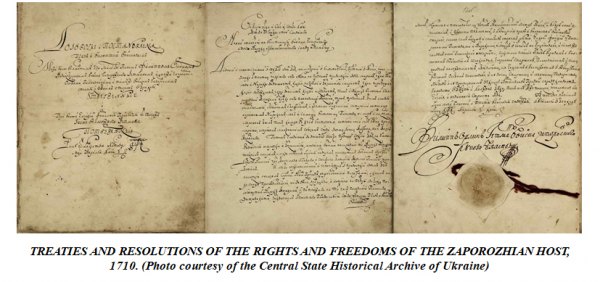
It is worth recalling that the first attempt at constitutional democracy-building in Europe was made by Pylyp Orlyk, Ukrainian Hetman of the Zaporozhian Host. This took place 77 years before the adoption of the United States Constitution. This event predated the political and philosophical works of Montesquieu and Jean-Jacques Rousseau in France, as well as the state-building efforts of the founders of American democracy – George Washington, Thomas Jefferson, John Adams, and Benjamin Franklin.
The Constitution, written and published by Pylyp Orlyk in 1710 under the title "Treaties and Resolutions of the Rights and Freedoms of the Zaporozhian Host", was never put into practice. However, it was published before the text of the United States Constitution, adopted in 1787, came into being. In one of the earliest constitutional texts of the modern era, Pylyp Orlyk proposed limiting the powers of an elected head of state and introducing the democratic principle of the separation of powers among the legislative, executive, and judicial branches.
The answer to the question of why we need to build democracy is simple. It is because there is no other system of governance devised by humankind that protects individual rights, freedom, and human dignity under the law and applies equally to everyone. At the same time, democracies have inherent flaws and are vulnerable to external aggression and the destructive actions of corrupt politicians from within.
The stability of democracies is ensured only by the simultaneous and systematic functioning of three key components: society, the elites and sound strategies. These must operate in unison and in accordance with the laws governing the existence of democracies. People who come to power without this knowledge become the gravediggers of democracies, even with the sincerest of good intentions.
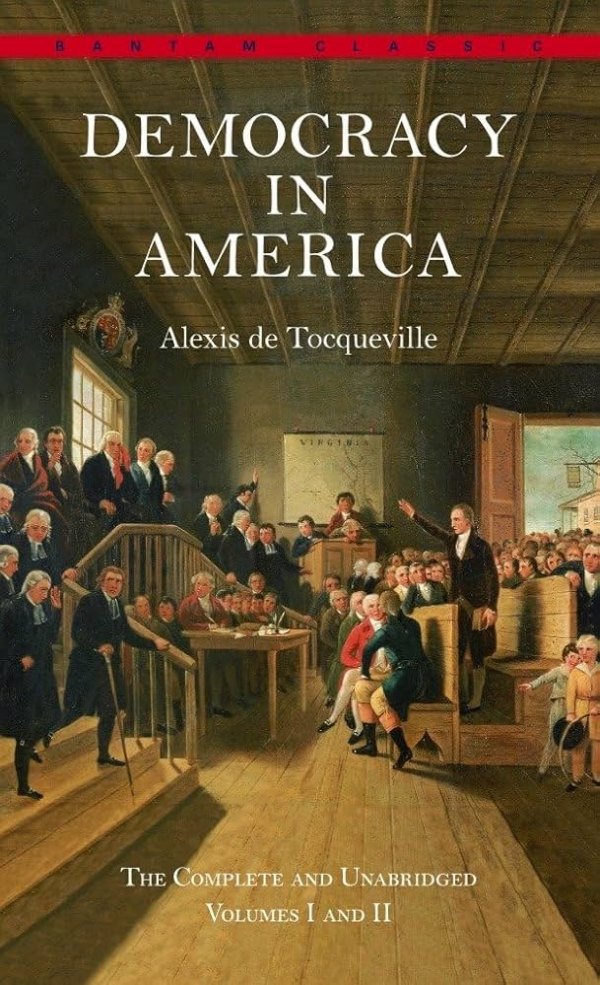
The French statesman and thinker Alexis de Tocqueville (1805-1859) drew attention to the shortcomings of democracies as far back as the 19th century. In his book "Democracy in America", he examined the architecture of US democracy and analysed the contradictions inherent in its models of governance. He noted that no democracy can take the perfect form of an ideal and is, in essence, a process that develops gradually, requires great effort and never achieves absolute perfection.
The essence of this democratic governance process is the constant search for ways to resolve contradictions, find compromises, and strike a balance among interests within society.
The advantages of democracies, in his view, included equal opportunities to succeed through productive, socially beneficial work, as well as social engagement, mobility, and advancement, which fuel economic progress. The disadvantages include an equality that disregards individual merit and the authority of the past, in which the voice of a distinguished and educated person is equated with that of a self-absorbed professional ignoramus. This fuels individualism and selfishness.
In the absence of established cultural and historical traditions in society that might be described as conservative, the transformation of the 'man in the street' into a ruling elite may lead to a decline in the spirituality and morality of society. He regarded religion, which nurtures moral principles, as a possible counterbalance. It is precisely through religion that the abuse of freedom can be avoided, its descent into anarchy prevented, and the stability and morality of society maintained.
De Tocqueville emphasised the importance of fostering the political culture of voting citizens. He regarded the selection of appropriate strategies and models for decentralising power and local self-government as the institutional means of achieving this. Without this, the political education of voters and active citizen participation in political life become impossible. The experience of ancient Greek democracies shows that effective governance, the selection of competent authorities, and their effective oversight are best achieved in small groups of people – that is, when power is brought as close as possible to the electorate.
De Tocqueville regarded the potential 'tyranny of the majority' as another flaw of democracy. In a democracy, there is always a risk that, after winning an election, the majority may impose its will on the minority. The protection of minority rights must counterbalance this. Institutionally, this can be ensured through the adoption of relevant laws, such as a law on the impeachment of the president and a law on the opposition in parliament, as well as through the judiciary's independence from the executive.
The model of political governance must necessarily include a statutory definition of the opposition's rights in parliament, as well as legally defined procedures for overseeing the executive branch and safeguarding the independence of the courts, with the principles of the rule of law and public oversight of all three branches of government enshrined in the constitution.
In this regard, de Tocqueville argues that freedom of speech and freedom of the press play a vital role. Independent and professional media form the basis for disseminating accurate information within society, ensuring government transparency and deterring authority from abuse and corruption. Freedom of speech, once appropriate models of political governance and local self-government have been chosen, is the guarantor of the formation of the political culture of the electorate. It also determines whether society is accurately informed about external and internal threats to the country, its citizens and its democratic institutions.
De Tocqueville admired the contemporary model of American democracy. He emphasised the fine balance between freedom, equality, religion and civic engagement. We must not forget that the slaves who ensured the prosperity of the American middle class of that era were not full citizens or voters. He stressed the need to adapt the complex system of governance to new living conditions. He warned that the emergence of a 'slave mentality' amongst voters posed a threat to democracy and could destroy the balance between freedom and equality. He drew on the experience of ancient Rome: 'Slaves dream not of freedom, but of becoming masters'.
The researcher also warned of the possibility of 'hidden tyranny', which arises when the level of political culture among elites, society, and the electorate declines. Tyrants can come to power through democratic elections. Once in power, they will inevitably attempt to bring all aspects of citizens' lives under their control. The consequence of this will be the destruction of the mechanisms for holding those in power to account, a decline in citizens' social engagement and their influence on the country's future.
In analysing concepts such as individualism and civic engagement, de Tocqueville identified yet another contradiction inherent in democracies. Namely, individualism prioritises personal interests while undermining civic engagement and responsibility. Political parties and trade unions, which unite society, can serve as a counterbalance to excessive individualism, but only when they are guided by the laws and ideology of democracy, functioning as ideological parties rather than operating on the principles of organised syndicates designed to satisfy material, egoistic, clannish interests.
The threat posed by selfish individualism to democracies exists not only at the level of citizens' lumpenised psychology, but also at the state level – amongst the country's political elites. In the former case, it is possible to counteract this through political education, spiritual and cultural traditions, and the moral values of religion. In the latter case, it can be countered through a national strategy of joint defence with other democratic countries, both against external enemies – aggressive authoritarianism – and internal ones – systemic state corruption perpetrated by corrupt political wheeler-dealers and hidden tyrants striving for power.
Historical experience shows that the initial construction of democracies is carried out precisely by conservatives, not by liberals. Liberals alone cannot build the socio-economic foundation of democracy – a strong national economy, an army, diplomacy and information policy. However, to successfully complete this process, at least two system-forming parliamentary parties are required: conservative-democratic and liberal-democratic. They must be united by a common goal – the building of democracy – whilst being divided by differing worldviews and the ability to exercise parliamentary oversight over the executive branch.
A conservative approach to safeguarding the nation's cultural and historical traditions, domestic industry, and the domestic market, and to blocking destructive external influences during the initial stage of state-building, can only be ensured by conservatives. The liberal slogan 'the free market will solve everything' is a death sentence for the construction of national democracy. You cannot diagnose or treat a condition based on the average temperature in a hospital ward. Only conservatives are capable of ensuring the growth of the middle class and the rule of law in a country with a separation of powers, whilst blocking attempts at external control over a still-vulnerable nation, particularly from 'globalists'.
Once the country's national institutions of government, the economy and the rule of law have been strengthened, the time for liberals will come. This is because even amongst conservatives in power, the virus of corruption exists, with money and influence acting as its potent stimulants. The consequence could be a creeping slide towards authoritarianism. Periodic and evolutionary liberalisation of excessively concentrated power is a necessity in a democracy. The examples of the modern USA, Hungary and Poland are plain to see. However, the sequence of these processes matters.
The explanation is simple: to improve something, you must first create it. One does not carry out finishing work or furnish a house without a foundation, walls, and a roof-to say nothing of the external influence from those who have no need for a robust national authority and a strong economy. It prevents 'globalists' from covertly appropriating resources and exerting political influence through their puppet politicians. The security services of authoritarian countries are likewise active. The success of democracies spells doom for dictatorships in their own countries. For transnational corporations, the national interests of states – even democratic ones – are secondary. They are not interested in ideology, but in their own profits. It is always easier to plunder the weak.
Finally, only conservative values are rooted in the bedrock of national traditions. An appeal to tradition is an integral feature of conservatism. Its global proponents included figures such as Edmund Burke, Alexis de Tocqueville, David Hume, General de Gaulle, Winston Churchill, Margaret Thatcher, Ronald Reagan, Vyacheslav Lypynsky and many other thinkers and distinguished statesmen.
Vyacheslav Lypynsky, the ideologue of Ukrainian neoconservatism during the Hetmanate of Pavlo Skoropadsky, asserted that national revival begins precisely with the revival of political elites. By this he meant all those capable of becoming 'leaders and organisers of the nation'. He called them the 'national aristocracy' and was convinced that such people must be self-sufficient, educated, of high moral character and possess certain resources for their activities – not oligarchic resources, but sufficient to ensure their own independence. Above all, they must 'conform to those concepts of legality and public morality by which the entire nation lives at any given historical moment'.
In other words, "the national aristocracy must possess, in addition to material power, moral authority in the eyes of its nation." "Without these fundamental characteristics – material strength and moral authority – there is not, and cannot be, a national aristocracy. And without a national aristocracy – without strong and authoritative leaders and organisers of the nation in its arduous struggle for existence – there is not, and cannot be, the nation itself."
Speaking of the era of the liberation struggle at the beginning of the last century, he also emphasised: "We absolutely must form people capable of public service. The current generation of Ukrainian politicians can be creative only in the cultural sphere; in the political sphere, however, it is destructive." Prophetic words, the lessons of which we are still only now internalising...
Блог автора – матеріал, який відображає винятково точку зору автора. Текст блогу не претендує на об'єктивність та всебічність висвітлення теми, яка у ньому піднімається. Редакція "Української правди" не відповідає за достовірність та тлумачення наведеної інформації і виконує винятково роль носія. Точка зору редакції УП може не збігатися з точкою зору автора блогу.