Theses for the Plan and Strategy to Rebuild Ukraine – The Elite, Society and Strategies (Part- 5.1.)
"Every national revival begins with the revival of the ELITE... No one will build a STATE for us if we do not build it ourselves, and none of us will create a NATION if we ourselves do not wish to become one... The Cossacks set demands first and foremost upon themselves, rather than upon the masses. They did not shift their state duties onto the PEOPLE, but set an example to the people themselves of how these duties should be fulfilled. They did not follow the people, but led them... They did not place their hopes in popular creativity (the opinion of the majority), but themselves gave the people their creative impetus (plans and strategies for salvation) " (Viacheslav Lypynskyi, 1882-1931).
The audacity of ignorance does not absolve one of responsibility. Erroneous actions or inaction driven by self-admiration and ambition, in the absence of professional knowledge, experience and the ability to foresee, lead to crimes. On a national scale, they lead to national tragedies. POLITICS is the science of the inevitable and the art of the possible. With SKILL, guided by KNOWLEDGE OF THE LAWS of the INEVITABLE and the ART OF THE POSSIBLE, one must forge appropriate strategic alliances in the right place and at the right time. It is impossible to become a genuine POLITICAL ELITE without bypassing the PROFESSIONAL ELITE.
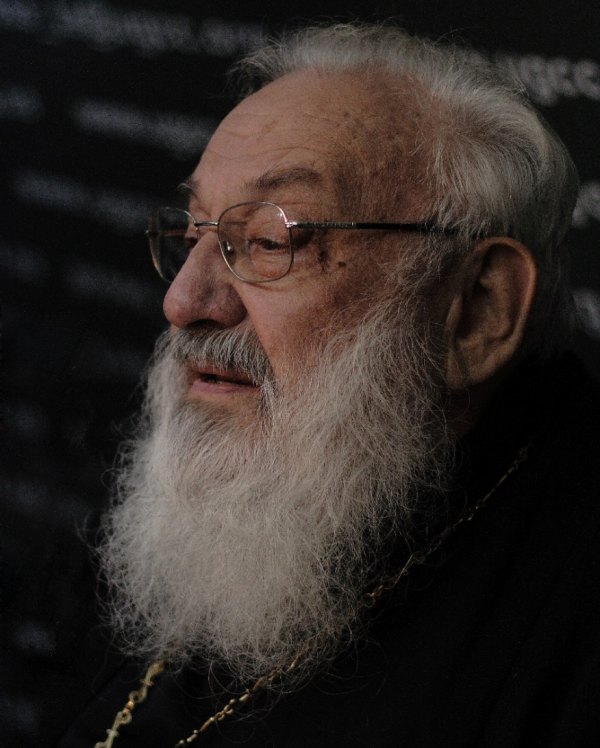
"The elite are people who can look far ahead and preserve what matters most – HUMAN DIGNITY. The elite are people distinguished by their life wisdom. WISDOM lies not only in knowledge, because someone may possess great knowledge and yet not be wise. WISDOM is the ability to see reality in its context, as a WHOLE." (Cardinal Liubomyr Husar, 1933- 2017).
Historical experience demonstrates that the fate of states and nations depends on the condition and quality of SOCIETY, ELITES, and STRATEGY.
In turn, the quality and state of these institutions depend on the activities of the three branches of state power-the legislative, executive, and judicial-as well as one non-state branch: the mass media.
This is precisely why journalists, political scientists and sociologists are often referred to as the 'fourth estate'.
In the context of the 21st-century information explosion, its influence on state processes cannot be overstated.
Through their activities, all four branches of state power shape society's political culture. They also build or destroy the image of society's finest representatives – the professional elite. The latter is the sole source for the formation of a genuine political elite in the country. However, the transition from one to the other is possible only through elections.
These same four branches of power either promote the right strategies for the country's development or conceal and suppress them. Only specialists from the professional elite can devise such strategies. Amateurs from the street are incapable of doing so.
It is well known that whoever controls information also controls public consciousness. Therefore, the 'fourth branch of power', together with the three state branches, bears responsibility for the voters' ability to distinguish genuine professional elites from charlatans.
The latter are formed either from professional elites – the treasure and reserve of the state resilience – or from political adventurers and professional ignoramuses. Such individuals in power become "useful idiots" for the state's enemies. Without the help of the media, society becomes blind and deaf, and the rise to power of moral and patriotic professionals is obstructed.
The fate of states and nations becomes even more complicated when the media in a country become completely dependent on corrupt authorities, oligarchs, external influence or opportunistic owners. Under such conditions, the path to politics and power for self-serving ignoramuses, pseudo-activists, populist windbags, business wheeler-dealers, swindlers, and sometimes even traitors and criminals becomes even more wide open.
Proclaiming themselves after the elections as "new faces in power" and a new "political elite", they in reality remain nothing more than puppets in a "political puppet theatre". Their backstage puppeteers may be the upper echelons of a corrupt regime, "clan feudal lords", oligarchs, international business groups or the secret services of other states. Sometimes – all of the above.
Such pseudo-elites are incapable of predicting the future, identifying external and internal threats, formulating effective strategies to overcome them in good time, and preparing the country to defend itself against possible aggression.
An indicator of this is the entry into an already corrupt system of former "exposers" of that system – journalists who abandon oversight in the interests of society. The circle closes. Having built their reputations as "exposers of previous authorities" and gained some credibility, they betray both professional ethics and society. Together with the "new" authorities, they become merely new beneficiaries of old corruption schemes within an unchanged system of power. They no longer fight the "system" but become accomplices in its new crimes. Moreover, they assist in destroying the reputations of professionals who continue to fight and are forced to publicly expose it, effectively replacing those who deserted from the media.
Another sign of the degradation of the "fourth branch" is the "work" of political scientists, sociologists, and the media, aimed at silencing society's true elites and artificially creating the image of virtual pseudo-"political elites" from "new" candidates convenient to the authorities and oligarchs.
An example of this is the removal of the political party "Strength and Honour" from opinion poll lists. A poll conducted on 21 January 2022 by the Kyiv International Institute of Sociology (KIIS) on the eve of the full-scale invasion recorded its leader's fourth-highest presidential rating – 9.6% of the vote – and also predicted that the party was guaranteed to enter the Ukrainian parliament with 7.8% support (https://www.kiis.com.ua/?lang=eng&cat=reports&id=1090&page=1&t=2). Following this, the party was excluded from all polls.
The party was perhaps the only political force to have clearly enshrined its own ideology – Ukrainian neoconservatism – and its strategic goal – the development of democracy – in its constitution and programme. In the parliamentary elections, it received the support of around 2 million voters. Of its more than 600 local councillors, many volunteered for service and gave their lives for their homeland. Postage stamps are issued in their honour, and streets are named after them. Among them are Hero of Ukraine, flying ace, Colonel Oleksandr Oksanchenko; marine Ivan Funtovyi; and paratroopers Ruslan Shevchuk, Viktor Honcharuk, and Maksym Maksymenko...
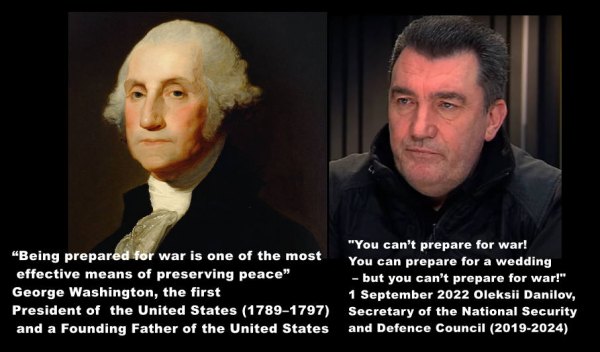
The consequence of such processes in society is the cementing of oligarchic and feudal-clan power. The deprofessionalisation of public administration is accelerating dramatically, whilst the likelihood of people appearing within it who can look far ahead and preserve what matters most – human dignity – is rapidly diminishing. Illustrative examples are at hand. One need only compare the wisdom of General George Washington with the statements made during the war in Ukraine by the then Secretary of the National Security and Defence Council, a veterinarian by profession.
-
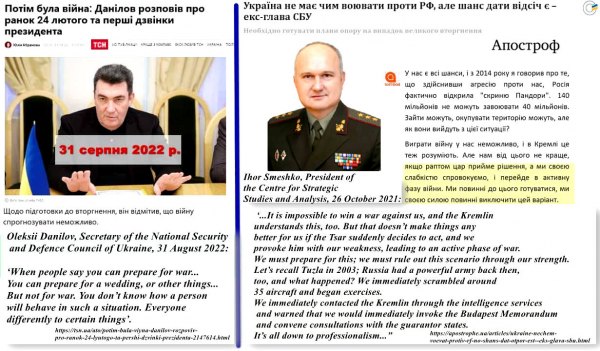
Oleksii Danilov, Secretary of the National Security and Defence Council of Ukraine, 31 August 2022: 'When people say you can prepare for war... You can prepare for a wedding, or other things... But not for war. You don't know how a person will behave in such a situation. Everyone reacts differently to certain things'. (https://tsn.ua/ato/potim-bula-viyna-danilov-rozpoviv-pro-ranok-24-lyutogo-ta-pershi-dzvinki-prezidenta-2147614.html)
-
Ihor Smeshko, President of the Centre for Strategic Studies and Analysis, 26 October 2021: '...It is impossible to win a war against us, and the Kremlin understands this, too. But that doesn't make things any better for us if the Tsar suddenly decides to act, and we provoke him with our weakness, leading to an active phase of war. We must prepare for this; we must rule out this scenario through our strength.
Let's recall Tuzla in 2003; Russia had a powerful army back then, too, and what happened? We immediately scrambled around 35 aircraft and began exercises. We immediately contacted the Kremlin through the intelligence services and warned that we would immediately invoke the Budapest Memorandum and convene consultations with the guarantor states. It's all down to professionalism..." (https://apostrophe.ua/articles/ukraine-nechem-voevat-protiv-rf-no-shans-dat-otpor-est-eks-glava-sbu.html)
-
Despite the fact that experienced military officers provided well-founded forecasts and warnings regarding the need for immediate preparations for war, in particular: the imposition of martial law, the restoration of a time-tested mobilisation system, the conduct of early mobilisation with appropriate operational and strategic reserves, the conversion of the defence industry to a wartime footing, the rearmament of air defence systems in particular, missile defence and the air force, as well as the early deployment of a multi-layered strategic defence system along the entire perimeter of the Russian-Belarusian border.
"Whose gunmen were shooting at people, and how Putin got exposed," TVi Channel, 11 March 2014. (https://youtu.be/H3xX-6P2uN4?si=d7gShA_2lNJNKjyV).
As for the hallmarks of the pseudo-elite, they have long been known. The fact that Ukrainian society still cannot recognise them is yet another testament to the quality of the work of the 'fourth branch of state power'. As far back as the 19th century, Gustave Le Bon, the founder of social psychology, aptly characterised such figures: "Whoever can supply them with illusions is easily their master; whoever attempts to destroy their illusions is always their victim."
Examples from Ukraine's recent history are close at hand: the two Maidan protests of 2004 and 2014. According to Stepan Khmara, a participant in both, "it was not the Maidans that came to power, but the spectacle of the Maidans". At the same time, warnings from the leadership of the Security Service of Ukraine were already voiced in 2004: "Those who believe in and are ready to fight for freedom and democracy will take to the streets, but power will go to those who were already part of the old system of power. They will not fight to change the system of power because they support authoritarianism and corruption. They need the Maidan to take the helm of power. Their hidden dream is power unrestricted by anyone or anything, akin to the Russian dictatorship."
After the 2004 Maidan protest, the professional officials who "set things straight" and prevented Viktor Yanukovych's first attempt to seize power and the bloodshed in Ukraine were dismissed – in violation of the Constitution and laws of Ukraine, 'in the revolutionary manner'. Power was filled with pseudo-revolutionaries, since no revolution in the classical sense of the word – "a radical change in the system of governance" – had taken place. No one even intended to reform it.
Once again, the ancient maxim was confirmed: "Power not guided by wisdom leads to disorder and injustice" (Socrates, 5th century BC), "Those who buy power with money become accustomed to profiting from it" (Aristotle, 4th century BC).
The collapse of the ideals of the 2004 Maidan protest was due to the fact that civil society in Ukraine was only just taking shape. There were no genuine political elites, nor any plans or strategies for building democracy. The strength of the Maidan lay in the middle class, which was dissatisfied with the slow pace of legal reforms and the loss of trust in the authorities. Its numbers were then at their highest since Ukraine's independence. Economic growth stood at 12.1% of GDP per year – one of the highest rates in Europe.
The unpreparedness of pseudo-democrats for reform and their betrayal of the Maidan's ideals cost "the people's president", Viktor Yushchenko, the support of society and the chance of re-election for a second term. In the 2010 elections, he secured 5.45% of the vote.
Having taken over a country with 12.1% GDP growth, he left the presidency with growth having fallen almost fourfold, to 3.8%. The system of government became even more corrupt and authoritarian. Tens of thousands of the most qualified professionals were ousted from government bodies. A handful of the super-rich turned into full-fledged oligarchs. The destruction of legal procedures for personnel appointments, the closure of criminal cases against Yanukovych's circle, and backroom deals with him paved the way for his presidency.
Ukraine's first two presidents at least admitted that they did not understand the laws governing the development of democracy. In an interview with the newspaper Den (Day) on the eve of the 2019 elections, President Leonid Kravchuk confirmed this once again. When asked: "What went wrong and why does Ukraine remain unreformed?" – he replied: "In 1991, it was proclaimed that Ukraine had become... a democratic state. And the people? We suddenly began building a new state. We had no knowledge of the new system, even though we were educated people: in Ukraine, there were over 900 people with secondary and higher education per thousand of the population. But this knowledge was completely different from what we needed in the new Ukraine... We began building a country that did not correspond to the aspirations of the people, but to a political class unfit to be the political class of an independent Ukraine. Decisions and laws were adopted that did not serve the people's interests. This situation persists to this day..."
When asked what Ukraine's national idea should be, Leonid Kravchuk remarked: "The national idea... is to live independently, democratically and in abundance. There is no need to specify: spiritually or materially? Independence and democracy encompass everything... We have set out on the path of democracy and this is the only correct decision... the main thing is the fight against corruption, uncertainty, ignorance, dual power, and irresponsible state governance... we must give people the opportunity to live and earn a living with dignity, to ensure democracy not in words but in deeds, independence not in words but in reality."
In the same interview, he warned: "These (presidential) elections could be our 'last mistake'." (https://day.kyiv.ua/article/podrobytsi-litnya-shkola-zhurnalistyky/tsi-vybory-mozhut-buty-nashoyu-ostannoyu-pomylkoyu).
As managers of the Soviet school, the first two presidents at least respected professional expertise. The fate of career professionals in the USSR is another matter, but the fact remains that during the civil war, over 60% of the officers of the imperial army were recruited into the Red Army. The first two presidents of Ukraine, with prior managerial experience, adhered to established procedures during appointments: they considered candidates' education, professional training, prior experience, and the existence of compromising material.
Following Viktor Yushchenko's "revolutionary" innovations in personnel policy, all subsequent presidents have abandoned such procedures. After the era of "dear friends", personal loyalty became the main criterion for selection.
For the first time since 2005, a candidate's foreign citizenship ceased to be an obstacle to government appointments. The first draft of the public broadcasting bill was torpedoed by the "people's president". Finance was handled by those who kept their funds in offshore accounts, healthcare by those who had been treated abroad, and education by those whose children studied outside Ukraine. Laws began to be drafted and passed by those to whom they no longer actually applied.
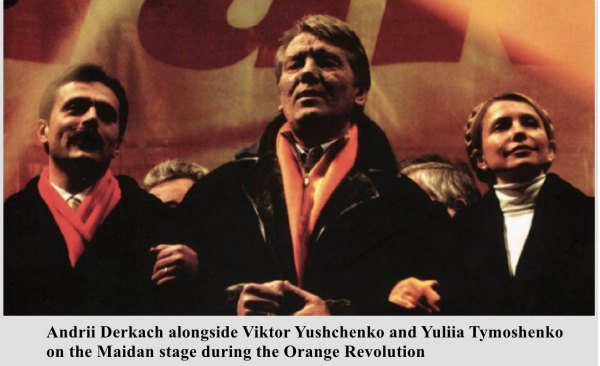
For example, Andrii Derkach, a graduate of the Academy of the Federal Security Service (FSB), was appointed head of the national nuclear energy generating company Energoatom. Before he appeared on the Maidan stage alongside Yushchenko, he had been in hiding in Russia.
In 2004, A. Derkach was implicated in two criminal cases, the investigations into which the Security Service of Ukraine (SBU) had successfully concluded: the establishment within the SBU of a 'situation centre' with links to Russian special services, and the smuggling of weapons to Sierra Leone in violation of UN sanctions. These cases were closed by the new SBU leadership, as were the cases concerning the parallel server of the Central Election Commission, the separatist congress in the City of Sievierodonetsk, and the Donetsk-based 'Hamadei' counterfeit cigarette factory.
Had these cases been brought to court, which would have taken just one or two months, the resurgence of Yanukovych and his political force would have been impossible...
To be continued...
Блог автора – матеріал, який відображає винятково точку зору автора. Текст блогу не претендує на об'єктивність та всебічність висвітлення теми, яка у ньому піднімається. Редакція "Української правди" не відповідає за достовірність та тлумачення наведеної інформації і виконує винятково роль носія. Точка зору редакції УП може не збігатися з точкою зору автора блогу.