Theses for the Plan and Strategy to Rebuild Ukraine – The Elite, Society and Strategies (Part- 5.2.)
'For all those who seek power... POLITICS is one of the highest forms of SERVICE. This path should not be chosen for the sake of personal enrichment...A politician should be a person who consciously strives to devote all their spiritual strength to society and the common good – to work, think and act for the good of the people" (Cardinal Liubomyr Husar, 1933-2017)
The war that Russia has been waging against Ukraine since 2014 has convincingly demonstrated to the world that Ukraine has a freedom-loving people, and its soldiers and army are among the bravest and most professional in Europe. Ukrainians have long deserved freedom, democracy and prosperity.
A genuine civil society has taken shape in Ukraine – unlike a mere population, it is ready to defend its own state actively. The country also has a powerful professional elite, which, together with the people and the army, helped it to stand firm, despite the authorities' inaction in preparing for war. At the same time, Ukraine lacks a fully-fledged political elite worthy of its people and army.
In the classical sense, the elites of any country are divided into political and professional groups. The political elite is significantly smaller in number, yet it is this group that governs the state. The political elite refers to social groups that hold the greatest power and influence, possess the legal authority to make strategic decisions and determine the development of the state and society. It is they who formulate plans and strategies in key areas: political, international, economic, financial, scientific and technical, military, medical, educational, informational, cultural, environmental and demographic.
Professional elites, in turn, are the executors of the decisions of the political elite. They may prepare proposals, advise and provide expert support, but do not have the authority to make strategic decisions. Career professionals in government bodies do not usually determine state personnel policy, control key resources, manage security agencies or formulate general strategies for the country's development.
The political elite consists of politicians who acquire their status through elections: either by direct election to public office or through appointment under the political quotas of the ruling parties. Politicians can be divided into active and reserve categories. Active politicians include both government representatives and opposition members who operate within the three branches of government. Pro-government politicians rely on the parliamentary majority, the government or the head of state, whilst opposition politicians rely on parliamentary forces in the minority. Reserve politicians are those who have previously held power and are preparing to return to it by standing in elections.
Individuals who stand for election but have never held political office or been elected are not politicians in the full sense of the word. They may be members of the professional elite or ordinary citizens. The mere fact of working in government bodies does not transform career professionals into politicians.
In particular, military personnel do not elect their Supreme Commander-in-Chief – they are elected by the people. At the same time, the Commander-in-Chief may represent a political force that part of the military did not support. Likewise, career professionals in leadership positions within security and law enforcement agencies do not become politicians merely because of a change in political leadership, provided their careers are not politically motivated. In most democratic countries, such specialists are even legally prohibited from engaging in political activities.
The question of the role of elites in state-building, particularly that of the military elite, has been raised repeatedly throughout history and in political thought. This is vividly reflected in the following statement:
'I believe that without the existence of a military elite, no European country would have had the slightest chance of becoming a modern European democracy. Historically, there is no developed European democracy that has been built without the participation of professional military personnel. The military typically builds democracy and then hands it over to civilians. Look at the biographies of General George Washington and General Napoleon Bonaparte. The latter's Civil Code is now the foundation of civil law jurisprudence in all Western countries. Generals Carl Gustaf Mannerheim, Józef Piłsudski, Charles de Gaulle, Mustafa Kemal Atatürk, the combat officer Winston Churchill...
The military elite are people who are ready at any moment to give their lives for their country's independence. Not all military men make good politicians, but they are generally good statesmen. However, I am personally unaware of any instances of populists and merchants becoming statesmen... Unfortunately, since 1991, our country has been witnessing the destruction of its military elite. They fear the military because, as human history teaches us, when the preservation of statehood and the nation is at stake, it is usually the military that puts a stop to arrogant and self-obsessed politicians."
(https://day.kyiv.ua/article/polityka-litnya-shkola-zhurnalistyky/urokderzhavotvorennya)
The quality of elites in any country is closely linked to the level of political culture in society. As a rule, the culture of politicians is no higher than that of the voters who elect them. There is an interdependence between society and the elites: society shapes its elites, and the elites, in turn, influence the transformation of the population into conscious citizens.
It is precisely on this 'elite-society' that determines not only the direction of a country's development, but also its civilisational level and the cultural quality of the state itself.
At the same time, it is worth bearing in mind that human nature changes slowly. Modern politicians differ little from their predecessors of antiquity. They often share the same flaws: a low level of morality and culture, a thirst for power and self-enrichment. Access to significant resources and powers of authority often acts as a strong incentive for abuse.
There also remains an underlying tendency among some politicians to transform democracy into authoritarianism, which allows them to evade accountability for betraying the public trust. During election campaigns, most of them conceal their true intentions, professing commitment to democratic values whilst simultaneously criticising their predecessors.
Most such politicians begin their tenure in power by removing career professionals, patriots and people of integrity. The reason for this is obvious: they fear criticism and accusations of power-grabbing, corruption and incompetence.
To avoid potential resistance, such politicians launch campaigns to discredit and persecute potential opponents, actively utilising both state-run and oligarch-controlled media.
At the same time, positions of power are filled with loyal individuals – friends, business partners, compatriots from the same region and conformists. The result is an environment where the defining qualities are not professionalism or integrity, but personal loyalty and a willingness to act by any means necessary.
This system often attracts cynical wheeler-dealers, seasoned corrupt actors, pseudo-expert populists, and outright ignoramuses, whose only 'advantage' is absolute loyalty, corporate solidarity, and a lack of scruples about the means used to achieve their goals.
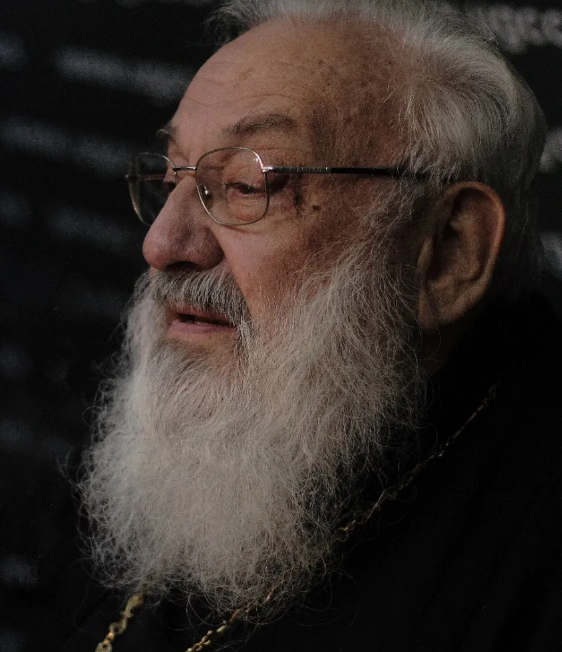
'Ukraine's main problem is moral degradation; everything else is merely a consequence.' (Cardinal Liubomyr Husar, 1933-2017)
When such people become politicians and reach the pinnacles of power, the state gradually transforms into an authoritarian, clan-based 'deep state', even if it formally retains the features of democracy.
At this stage, the 'deep state' establishes complete control over all branches of government, rendering governance processes opaque to society. Although institutions may continue to perform formal, 'ritualistic' pseudo-democratic procedures and feign independence, real governance shifts to an informal centre of influence that has not been elected by the people.
In essence, such a system differs little from the activities of an organised criminal group. Its characteristic features include 'manual control' of law enforcement agencies, the erosion of the rule of law, the de-professionalisation of public administration, as well as total corruption and the systematic plundering of the country's financial and material resources.
It is important to note that the emergence of such a 'deep state' is possible not only in weak or transitional countries, but also in developed democracies. None of them is immune to the election of immoral, incompetent, corrupt and authoritarian-minded individuals coming to power. In some cases, these may even be agents of influence from authoritarian states, whose aim is to discredit and undermine democratic institutions from within.
The logic of this process is simple: a successful democracy, especially in a neighbouring country, poses a threat to authoritarianism and despotism. It demonstrates an alternative – freedom and higher living standards for citizens – which undermines the legitimacy of non-democratic regimes.
At the same time, democracy itself is not a self-sustaining system – it requires constant protection and support. The threat of its degeneration into autocracy or tyranny is ever-present. Risk factors include uncontrolled 'liberalisation', a distorted understanding of globalisation, and passive, 'toothless' observation of the erosion of its laws and fundamental principles.
The process of state degradation becomes irreversible when two things happen simultaneously: political elites lose their calibre, and society allows this to happen. In such a situation, the very subject capable of defending democracy effectively disappears – both from external pressure from autocracies and from internal personnel erosion.
It is not for nothing that they say: 'the fish rots from the head down'. Pseudo-democratic elites lose the ability to adapt the public administration system to new challenges, and the authorities cease to fulfil their key function – protecting the rule of law. Political parties are gradually turning into 'feudal enclaves' for their leaders, whilst the 'fourth estate', instead of exercising oversight, contributes to the 'loss of memory' and political culture among voters. (https://blogs.pravda.com.ua/authors/smeshko/68bea7a6e1a20/)
As a result, society becomes vulnerable to manipulation: voters are increasingly falling prey to political tactics, 'black PR' and targeted information campaigns against those who still try to uphold democratic principles.
Against this backdrop, power structures become increasingly populated by 'professional' populists, grant-dependent activists, media 'experts', as well as individuals who are economically, militarily, and diplomatically incompetent, and conformists. The concept of 'new faces' is often reduced solely to age, whilst the obvious is glossed over: the lack of proven experience and a professional track record.
At the same time, the concept of an 'effective manager' is being used as a substitute for the concept of a 'professional'. Such a substitution seems absurd when applied to other fields: no one would want to find themselves on an operating table without a surgeon, or board a plane without a pilot, both of whom have been replaced by 'managers'.
An additional danger is that the promotion of such people is often supported by external and internal players – corrupt authorities, oligarchs, transnational structures and even foreign governments.
The Austrian democracy researcher Martin Pollack warned of such threats, emphasising the link between the degradation of elites and that of society: "...intellectuals have been silent of late: everyone is minding their own business, writing their books, putting on their plays, and so on... In my view, this is where the great danger lies... young intellectuals have grown accustomed to democracy, freedom, and the rule of law. They do not want to fight for these things because, for them, they are the norm, like water that is supposed to flow from the tap. But I remember times when... I turned on the tap, and there was no water. The same may happen with democracy – you may turn on the tap and find that the water is no longer there...".
(https://life.pravda.com.ua/culture/2016/07/07/214585/).
The issue of the quality of political elites and their influence on state policy is universal and is supported by both practical experience and the assessments of authoritative experts.
In particular, the American diplomat George Kent, who has more than thirty years of service, emphasises the importance of professionalism in state governance:
"Trump's first administration was staffed by competent professionals. In my view, we have always had a tradition – regardless of which party is in power – of bringing in professionals capable of promoting and defending US national interests. For 80 years, Americans understood that the security and prosperity of our allies and partners contribute to our national interests, our security and our well-being. That is precisely why the US devoted so much effort and resources to supporting the success of its partners and allies.
During his second term, Donald Trump adopted a completely different approach. It is a transactional approach: what you do for me – not for the United States, but for me, Donald Trump, and his inner circle. And the people who are ministers and members of his government are not competent professionals. They are simply incompetent. They lack strategic vision, and it seems they have neither an understanding nor an awareness of history or geography, which leads to flawed political decisions – as we are seeing this week (the interview was recorded on 19 March – the Ukrainska Pravda) in the war against Iran and its impact on the global economy. Unfortunately, we also see this in negotiations conducted by real-estate developers who know nothing about Russia and Ukraine in the context of Russia's war against Ukraine. (https://www.pravda.com.ua/articles/2026/03/23/8026713/)
This assessment underscores a central problem: abandoning the principle of professionalism in the formation of government inevitably leads to strategic mistakes and the weakening of the state.
Summarising this view, the American political scientist Zbigniew Brzeziński formulated a fundamental principle governing the functioning of states:
"States do not perish because of wars – they perish from the degradation of their ELITES. When the ruling class becomes incapable of governing, the country weakens regardless of the external threats it faces."
The task of intellectuals – both the professional elite and the genuine political elite, that is, 'philosopher' as defined by Plato, lies in ensuring that "democracy does not disappear". Albert Einstein, in his own way, emphasised the same idea: "Life is like riding a bicycle: to keep your balance, you must keep moving."
This means that democracy cannot exist without constant development and reflection on its own experience. Progress is based on knowledge and experience, but it begins not only with the answer to the question 'what do we want?', but first and foremost – 'what do we no longer want?' It is the awareness of past mistakes and negative experience that forms the foundation for moving forward.
At the same time, this alone is not sufficient. Without a clearly formulated goal and an understanding of the correct direction of development, there is always a risk of regression – a return to old mistakes under new conditions. Therefore, true markers of progress must be based on both knowledge and experience, as well as an understanding of the signs of decline.
In this context, it is important to realise: democracy is not a natural or guaranteed state of society. It is a complex system of government that requires conscious building, constant maintenance and self-discipline on the part of citizens. Its core value lies in the protection of human rights and freedoms, which is only possible with strong institutions, effective legal mechanisms and established procedures.
Until these institutions become a historical tradition, the danger of a return to autocracy remains constant. History knows of no models of power that would guarantee human rights and freedoms without the effort of elites and society. Instead, autocracies are characterised by other features: the self-enrichment of political elites, the pursuit of unchecked power, and selective justice based on the principle: "everything for us, the law and punishment for our enemies." (https://blogs.pravda.com.ua/authors/smeshko/68b5ebc21a8c2/)
Unfortunately, throughout the years of Ukraine's independence, not a single parliamentary political party has proposed a comprehensive strategy and plan for building democracy. Political elites in power failed to draw proper lessons from the historical experience of Ukraine and the world, did not think strategically, and often ignored the analyses and proposals of academics and representatives of professional elites. (https://day.kyiv.ua/article/den-planety/nevyvcheni-uroky-hetmanatu-ta-natsionalna-ideya-ukrayiny-u-suchasnykh-umovakh2) (https://blogs.pravda.com.ua/authors/smeshko/68a5dd747bc1f/)
As a result, instead of building a fully-fledged democracy in accordance with the objective laws of its development and the requirements of the Constitution of Ukraine, only an imitation of this process took place.
Under such conditions, the renewal of the political elite through the appointment of professional personnel became practically impossible. Moreover, with each new electoral cycle, the pseudo-political elite became increasingly substandard – less professional, more corrupt, and in some cases even lumpenised.
Since the first Orange Revolution, these processes have only intensified: the political elites have gradually come under the shadow influence of oligarchic and clan-based groups. A telling example of such trends can be seen in the political career of Mykhailo Havryliuk: his transition from a symbol of protest to parliamentary activity demonstrated that personal courage, undoubtedly an important virtue, is not, in itself, sufficient for effective state-building and governance.
What proves decisive for the quality of state governance is the level of education, professional experience, culture, as well as the capacity for strategic thinking and a systemic vision of processes.
This relationship between the quality of elites and the environment in which they are formed was explained by the American researcher Jacques Fresco: "Our customs, behaviours and values are by-products of our culture.
No one is born with greed, prejudice, bigotry, patriotism and hatred; these are all learned patterns of behaviour. If the environment is unaltered, similar behaviour will reoccur."
Thus, the degradation of political elites is not merely a consequence of the individual qualities of specific people, but also a reflection of the environment in which they are formed and reproduced.
Changing the environment in Ukraine without renewing the political elites through new architects and state builders drawn from the ranks of the professional elites is practically impossible.
New parliamentary parties must play a key role in this process. They must not only understand the principles of building democracy, but also have a clear ideology, a long-term strategy and realistic programmes for its development.
At the same time, this is not enough without support from civil society institutions. Together with professional and independent media, as well as expert political scientists and sociologists, these political forces must help to raise voters' legal awareness.
It is precisely this interaction that creates the conditions for democracy to function effectively. Freedom of speech and well-thought-out strategies for reforming public administration and local self-government become key instruments for ensuring the transparency of the authorities, their accountability to society, and for curbing abuse, corruption and authoritarianism.
Theses for the Plan and Strategy to Rebuild Ukraine (Part 1) (https://blogs.pravda.com.ua/authors/smeshko/6989c011528d0/)
Theses for the Plan and Strategy to Rebuild Ukraine (Part 2) (https://blogs.pravda.com.ua/authors/smeshko/6989c011528d0/)
Theses for the Plan and Strategy to Rebuild Ukraine – Formula for Economic Growth (Part 3) (https://blogs.pravda.com.ua/authors/smeshko/6989c011528d0/)
Theses for the Plan and Strategy to Rebuild Ukraine – USSM (Part 4) (https://blogs.pravda.com.ua/authors/smeshko/6989c011528d0/)
Theses for the Plan and Strategy to Rebuild Ukraine – The Elite, Society and Strategies (Part- 5.1.) (https://blogs.pravda.com.ua/authors/smeshko/69e60f59dd4e7/)
Блог автора – матеріал, який відображає винятково точку зору автора. Текст блогу не претендує на об'єктивність та всебічність висвітлення теми, яка у ньому піднімається. Редакція "Української правди" не відповідає за достовірність та тлумачення наведеної інформації і виконує винятково роль носія. Точка зору редакції УП може не збігатися з точкою зору автора блогу.